
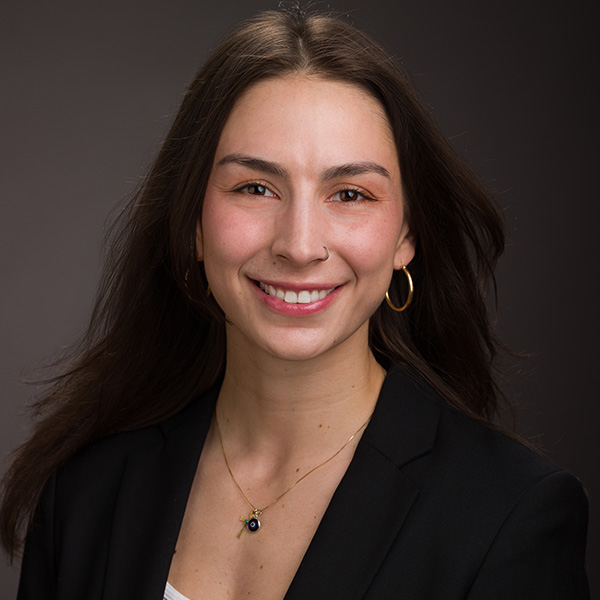
At 26, Grace Basralian, a medical student at Hackensack Meridian School of Medicine, saw a spine surgeon do something she was not expecting.
During one of her most formative rotations, the surgeon consistently went further than most. He slowed down visits, sat with patients, and treated education as part of the procedure itself—carefully explaining when surgery was appropriate, when it wasn’t, and what every possible outcome could look like. Even when complications occurred, patients trusted the process because nothing had come as a surprise.
“That was the kind of physician I wanted to be,” Basralian said. “Someone who builds trust through education.”
That moment stayed with her as she moved through medical school, reinforcing a belief that has shaped her path toward orthopedic surgery: technical skill matters, but how a physician communicates matters just as much.
EARLY INTEREST
Raised in Bergen County, New Jersey, Basralian knew early on that she wanted to stay close to home for medical school. After completing her undergraduate studies at George Washington University and spending a gap year in New York City, she returned to the region to train near the friends and family who have supported her throughout her journey.
Her interest in medicine took shape early in college, when she enrolled in an anatomy course offered through the medical school at GW. As a first-year student, she spent hours in the anatomy lab—an experience that clarified her direction.
“I got into the anatomy lab and just fell in love with it,” she said. “That’s when I knew medicine was the right path for me.”
DISCIPLINE AND FOCUS
Initially torn between veterinary medicine and human medicine, Basralian was drawn to surgery, fascinated by anatomy, biomechanics, and the precision required to restore function. Over time, that interest narrowed into a clear goal: orthopedic surgery.
Outside the classroom and hospital, Basralian is a dedicated weightlifter, a discipline she began her senior year of high school and has maintained through college and medical school. She trains five to six days a week, even during demanding clinical rotations.
“It’s the one hour a day where there’s no medicine and no studying,” she said. “No matter how stressful the day is, I always feel better afterward.”
That consistency mirrors the approach she brings to her medical training: showing up, staying disciplined, and putting in the work even when it’s inconvenient.
LEARNING TO TEACH
While her interest in orthopedics is rooted in anatomy and biomechanics, Basralian says her clinical experiences shaped the kind of surgeon she hopes to become. Across clerkships and away rotations, she observed how thoughtful communication could transform patient interactions.
“I’ve seen patients with complications who were still calm and trusting because their physician had explained everything clearly from the beginning,” she said. “They felt prepared, not blindsided.”
That emphasis on education extends beyond patient care and into Basralian’s role as a teacher and mentor. She credits the collaborative culture at the School of Medicine as one of its defining strengths.
“There’s no sense of competition,” she said. “Students genuinely want to help each other succeed.”
Basralian has served as a peer mentor and tutor and regularly advises younger students interested in orthopedics.
“I really enjoy teaching,” she said. “I want to work with residents and students—not just clinically, but as a mentor.”
ASKING BETTER QUESTIONS
That passion for education also shows up in her creative and research work. One of her most visible contributions is a histology coloring book developed with faculty and fellow students, designed to make a challenging subject more approachable through illustration.
Her most meaningful research project spanned nearly her entire time in medical school. Beginning as an M1 and completed during her fourth year, the study examined public perceptions of weightlifting during pregnancy using artificial intelligence tools to analyze sentiment across social media discussions.
“It started from something I noticed in everyday life,” she said. “I saw how divided people were on the topic and wanted to understand those perceptions more objectively.”
LOOKING AHEAD
As Match Day approaches, Basralian is both excited and realistic about the road ahead. Orthopedic surgery remains one of the most competitive specialties, but her focus remains on continuing to grow, wherever that journey leads.
Ultimately, she hopes patients will see her as a physician who takes the time to explain, listen, and earn trust.
“If patients walk away feeling informed and heard,” she said, “then I’ve done my job.”