
The patient woke slowly from the anesthesia, repeating the same words over: Thank you. Thank you. Thank you so much. After months of suffering from hip pain which made walking nearly impossible, the procedure to treat her femoral acetabular impingement (FAI) provided nearly instant relief.
For Ryan Paul, a sophomore in college shadowing the surgery, the moment was course-changing. His mentor pulled him aside afterward to emphasize the importance of what had just happened, the transformation which had just been wrought.
“He pointed out that this wasn’t just a successful procedure,” recalled Paul, “This was a mother who could finally go home, walk comfortably, and get back to taking the best care of her children again.
“That surgery stayed with me,” he added. “It showed me how dramatic a reversal of fortune can be through the work of your hands.”
Now a fourth-year student at the Hackensack Meridian School of Medicine (HMSOM), Paul is near to graduating with his medical degree, with an eye toward a residency in orthopedic surgery. Beyond helping patients in need, Paul has been driven over the past decade by the complex dynamics of the shoulder, especially as it relates to baseball pitching. He’s already worked with many surgeons at the top of their field, and helped to contribute to over 80 peer-reviewed publications, dozens of national-level presentations, and some especially novel research projects which have upended some traditional wisdom about medical interventions for common orthopedic injuries.
“Ryan Paul is enacting the mission of the school - taking a rigorous scientific background and applying it with a sense of purpose for the community,” said Jeffrey Boscamp, M.D. president and dean of the Hackensack Meridian School of Medicine.
HAPPENSTANCE - AND HEALING
A career in medicine was not always a certainty for Paul. Growing up in Bayville, N.J., he did not know any doctors or even health care professionals. His father was a police officer, his mother was a homemaker, and nobody in either his immediate or extended family had ever received a Bachelor's degree. Despite this, his parents strove for academic excellence and the pursuit of a fulfilling career- pushing him to lean into math, science, playing the trumpet, and sports (especially baseball) at a young age. And the main spark was that he truly enjoyed them all.
Combining his early love for science and baseball, he pursued Exercise and Sport Science at Temple University. Throughout college, he searched for the right fit for his skill set among fields like physical therapy and athletic training. The “Eureka” moment became possible through a case of mistaken identity. As a sophomore, Paul had intended to shadow a physical therapist named Martin Kelley. But due to some confusion, he was also paired with an orthopedic surgeon, a Dr. Kelly, who worked in the same building just several floors above Martin Kelley! His first day in the operating room instantly inspired him and set him on a new course, as he explained years later.
“Orthopedic surgery looked challenging, amazing, fulfilling, and like a life of continued learning,” he said. “I fell in love with it, then and there.”
His efforts at Temple University did not go unnoticed, as his early academic research, leadership, and service to the community led to him becoming one of the select few to win the Temple University Diamond Award.
RESEARCH, AND RESILIENCE
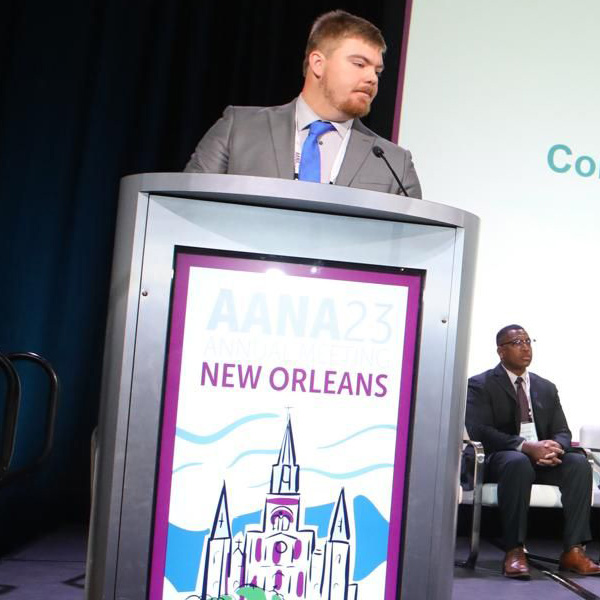
Paul has parlayed his passion into an extraordinary research career even before earning his medical degree. Much of his work has focused on the biomechanics of baseball injuries, particularly in the robust dynamics of the shoulder in pitching. This all started his first week of college at Temple University when he introduced himself to a professor named Dr. Stephen Thomas, whose research interest involved ultrasounding the healthy and injured shoulders of baseball pitchers. Paul knew he was young and inexperienced, but realized that medical research in his favorite sport was an opportunity of a lifetime. Throughout college, Dr. Thomas guided Paul through his career exploration, and even helped Paul get a research position at the Rothman Orthopedic Institute. His work with Dr. Thomas hasn’t ended there, as next month he is planning to go down to Florida for the sixth straight year to help Dr. Thomas collect data at the Philadelphia Phillies spring training.
Linking up with that group has produced some remarkable results. Last year, Paul was part of the team that both earned a $50,000 research grant from Major League Baseball and was later on awarded the prestigious Charles S. Neer Award for Basic Science for the research on labral injuries and glenohumeral kinematics, an award given to only one project internationally per year. In essence, the study in cadaver models proved that some shoulder surgeries don’t leave the optimal outcome - and for this niche population of baseball pitchers, it should not be the standard of care.
“Some people trained in sports medicine were already thinking this, knowing that we were over-constraining the top of the labrum too much, but we didn’t have the cadaver proof,” said Paul. “Now there’s literal biomechanical proof.”
During his success with research, Paul has nonetheless kept his focus on the human element. When his mother underwent surgery at Jersey Shore University Medical Center in 2019, it reinforced his decision to start his medical journey with Hackensack Meridian Health.
“I had a lot of respect for the Hackensack hospital system growing up,” said Paul. “When I was offered the full tuition scholarship, it was an amazing opportunity to stay in the state I love, work in a system I respect, and build a career here.”
MATCH DAY - AND ONWARD
As Paul awaits Match Day, he is also completing a Masters of Business Administration (M.B.A.) degree at Seton Hall University. In this he hopes to eventually impact health care at a business and administrative level.
Beyond the clinic and the lab and the baseball diamond, Paul stays active through a unique hobby: semi-professional spike ball. (It’s a sport that’s a two-vs-two variant of volleyball using a circular net on which one “spikes” the ball.) Paul and his teammate finished third out of 81 teams in a national tournament to earn their “semi-professional” status. He also finds time for running to keep in shape, running two half-marathons with his HMSOM classmate and orthopedic research teammate Jordan Windsor.
His career will aim to positively impact the communities which helped him growing up, he said recently.
“I’m going to keep putting in the work and see where things take me,” said Paul. “I want to serve the community that raised me.”